Portraits of Fertility by RMA of New York – Long Island
Celebrating 35 years of advancing fertility science and turning hope into possibility. At RMA, every breakthrough begins with love.
Professional Athlete: Kelley O'Hara
Kelley O’Hara, retired Gotham FC soccer player and Olympic gold medalist, recognizes that conversations around family-building are often overlooked during the peak of an athletic career. With a focus on performance, many players don’t fully explore their options, or consider how those decisions may impact their future fertility. As part of planning for her own family-building journey, Kelly chose fertility preservation with Dr. Phillip Romanski and Dr. Kimberley Thornton, giving herself greater flexibility for when she and her partner decide to grow their family.
In this video, Kelley reflects on a broader cultural shift made possible by advances in reproductive medicine, empowering women with more options and greater agency to take ownership of their reproductive timelines.
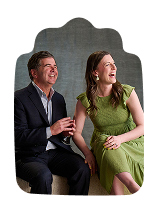
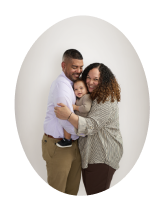
In their own words, these families share their emotionally demanding journeys to parenthood and experience working with fertility specialists to build their dream families. They have all welcomed children via IVF, a highly effective treatment for a variety of infertility causes. RMA of New York – Long Island uses the most advanced technologies and evidence-based medicine to help patients achieve high IVF success rates and healthy pregnancies.
Abigail and Julie both proactively froze their eggs to preserve their fertility, Abigail after finding out she is a BRCA carrier and Julie after being diagnosed with PCOS. Hear about their decision-making processes and experience during the fertility preservation process in these videos. Egg freezing is a valuable option for women who want to preserve their current fertility due to medical concerns or delay pregnancy and family-building until the time is right without worrying about an age-related decline in fertility.
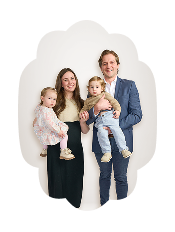
The path to parenthood looks different for every couple and individual. Katie and Peter share their story of becoming pregnant spontaneously while also expecting a second baby through a gestational surrogate, and Carin and Kelli discuss becoming single parents by choice. RMA of Long Island works with each patient to create a personalized treatment plan tailored to individual circumstances and goals, including third-party reproduction options including sperm donor conception, egg donor conception, and gestational surrogacy.
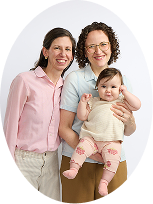
Couples in the LGBTQIA+ community share their family-building journeys, touching on co-IVF, low ovarian reserve, pregnancy loss, and high-risk pregnancy. Both couples also discuss the acceptance and support they felt from their care team. RMA of Long Island has a longstanding commitment to the LGBTQIA+ community, helping individuals, couples, and families embrace the numerous opportunities they have on the path to parenthood.
Having insurance coverage and benefits for fertility treatment and preservation played a significant role in these patients’ decisions to move forward with their fertility journeys. Employer-sponsored fertility benefits are becoming more common, alleviating stress and financial burden for those who need fertility services when building their family.
As reproductive medicine evolves, so do we. RMA of New York – Long Island remains committed to advancing research, refining clinical protocols, and investing in the next generation of fertility innovation.
The future of care depends on scientific rigor, thoughtful technology, and a continued focus on patient outcomes - and we are dedicated to leading that progress for the next 35 years and beyond.
The Journey Continues
Explore more stories, insights, and perspectives from our "The Journey Is Worth It" campaign.
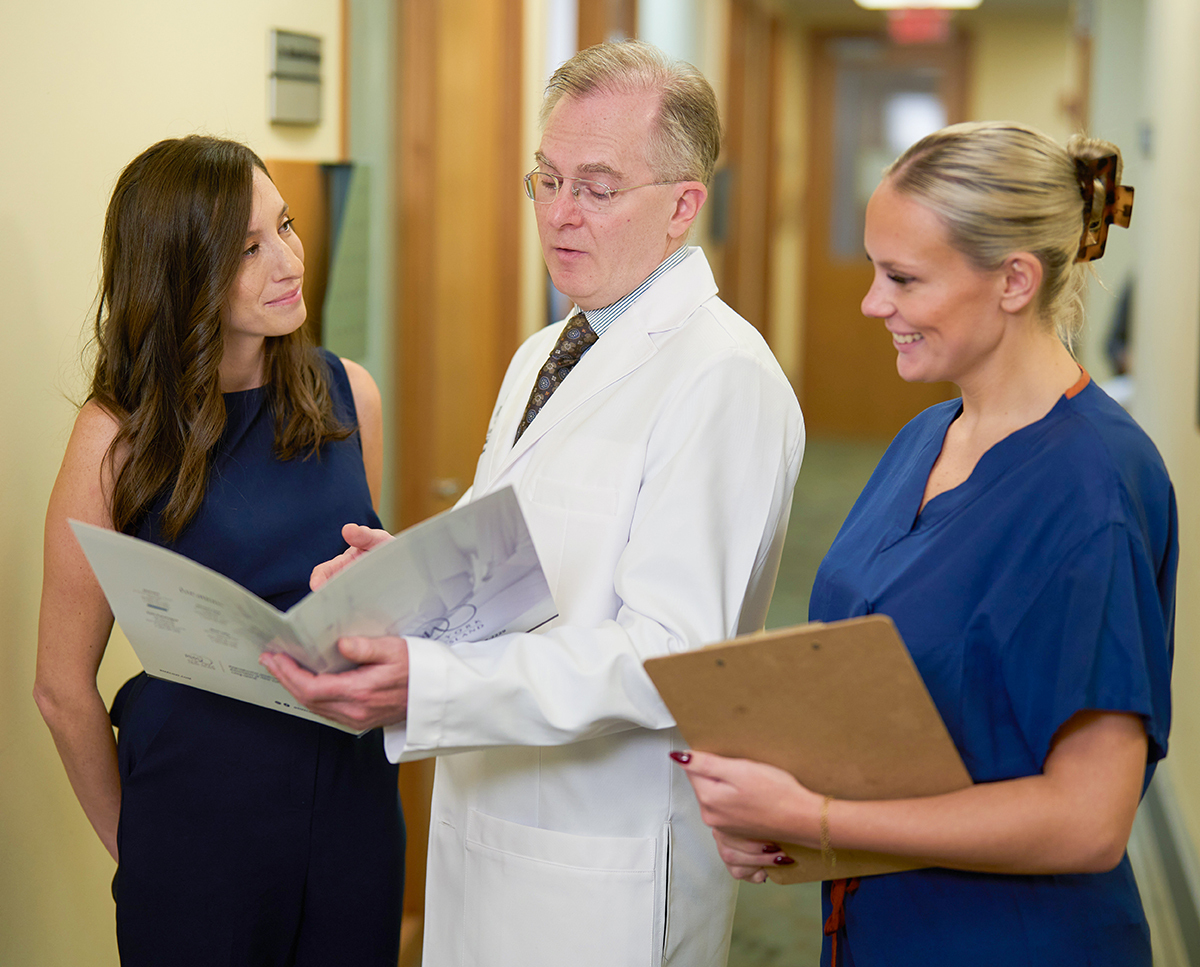
RMA of New York – Long Island’s integrated clinical team is dedicated to supporting you throughout your reproductive journey. Practicing evidence-based, data-driven precision medicine, our team of physicians, nurses, and embryologists collaborate with our patient service coordinators, nutritionists, therapists, and other healthcare professionals to help make your personal family-building goals a reality.
In times of uncertainty, it’s reassuring to know that your doctor is giving you the best possible advice. Not just what science says on paper, but drawing on her knowledge of you as two real people sitting in front of her. We had that in Dr. Jackson-Bey.
— Mary and Fernando
My husband and I knew we wanted a family, but like many couples, we didn’t have a set timeline. It wasn’t until we experienced the unexpected loss of our nephew that our perspective shifted. In the midst of our grief, we found clarity—we deeply value family and were ready to begin trying for a family of our own.
After a year of trying to conceive without success, my doctor referred us to RMA of New York. We arrived at our first fertility consultation carrying a mix of uncertainty and hesitation. We had constant questions running through our minds, like, “Will this be like other doctors’ offices? How seriously are we going to pursue fertility treatment? How much effort can we make?” But something changed the moment we walked into the waiting room and saw all the other people there on similar journeys. The experience was grounding and humbling. We realized we weren’t alone.
Everything clicked when we met Dr. Jackson-Bey. For me, seeing a fertility specialist who shares my identity as a woman of color brought an immense sense of comfort and trust. Through every interaction with the broader care team, from nurses to financial counselors, we felt supported, respected, and understood. Dr. Jackson-Bey gave us a clear and honest assessment of our fertility challenges, and guided us toward IVF as the best path forward.
What followed was a long and emotionally demanding journey, including the joy of a positive pregnancy test, followed by a devastating loss. The loss was an extraordinarily vulnerable time, and we questioned whether we could bring ourselves to keep trying. We were exhausted. If it weren’t for Dr. Jackson-Bey, that may have been the end of our fertility journey. She encouraged us to try again, and we trusted that she wasn’t simply giving medical advice. She had genuine care for us, and believed we would be successful.
The final embryo transfer changed everything, resulting in a full-term pregnancy. We welcomed our son, Felix—a miracle in every sense of the world. We celebrate his life, while continuing to honor the baby we lost. You learn that it’s possible to hold both grief and gratitude at once.
Jenna and Kyle's Story
It takes tremendous resiliency to move past loss and heartbreak to find the strength to try again. RMA of New York felt like a family dedicated to helping us grow ours. We finally exhaled when we put our daughter in the car to leave the hospital.
— Jenna and Kyle
When my husband and I decided to start a family, things seemed to fall into place quickly. We became pregnant after three months, but we lost the baby at 12 weeks. The loss deeply affected both of us, and as we tried to move forward, the emotional toll became overwhelming. I spiraled. I was consumed by anxiety, lying awake at night fearing I’d never become a mom. I became hyperfocused on tracking ovulation and taking pregnancy tests, and I realized it was taking a toll on my mental health.
One night while I was scrolling, I connected with another patient’s story on social media about their experience with RMA of New York. That connection led me to Dr. Tia Jackson-Bey, who immediately made me feel seen and supported. One moment stood out: her reassurance that my husband and I were “just as deserving to have a family as anyone else.” It was exactly what we needed to hear.
I began treatment with intrauterine insemination (IUI), but after three unsuccessful cycles, we decided to move to in vitro fertilization (IVF). My egg retrieval and transfer were successful, but emotionally, we approached each milestone cautiously. Dr. Jackson-Bey kept us steady. She met us exactly where we were, acknowledging our fear, honoring our experience, and guiding us forward without pressure. That emotional intelligence made all the difference as I held my breath through each monitoring appointment.
Today, we’re the parents to two children, both conceived through IVF at RMA of New York. After loss, hope can feel fragile. But with the right support, it’s possible to move forward and ultimately grow the family you’ve been dreaming of.
Jill's Story
There was a lot of uncertainty to tolerate, and it wasn’t easy, but I would do it 100 times over to have these two kids. They are the lights of my life.
— Jill
My husband Jeff and I had the perfect plan. We’d spend the first year of our marriage enjoying a honeymoon phase and then start a family. You know what they say about best laid plans. Things did not unfold as easily as we hoped. We tried to conceive for months without success, but I wasn’t too concerned and neither was my OB/GYN. After all, it doesn’t happen right away for many couples.
It was my therapist who encouraged me to seek answers sooner rather than later, and I asked my OB/GYN for a referral to a fertility specialist. That brought me to RMA of New York and Dr. Eric Flisser. I was diagnosed with unexplained infertility, which was incredibly frustrating and left me with more questions than answers. But one thing was clear—we’d likely need fertility treatment to become parents.
I began with Clomid, a common first-line fertility medication that stimulates ovulation by increasing hormone production. After three cycles without success, I decided to move directly to in vitro fertilization (IVF).
My first IVF cycle went exactly to plan, but unfortunately, I miscarried in the second trimester. The loss was devastating. Throughout it all, Dr. Flisser remained not only clinically focused but deeply compassionate. He shared in our disappointment while continuing to reassure us that we would become parents.
Holding onto that hope, we moved forward with a second IVF cycle. This time, it led to the outcome we had so desperately wanted: the birth of our son, Henry. A few years later, we expanded our family with the arrival of our second son, Jonah, also conceived through IVF.
My boys are now ten and seven. What once felt like overwhelming uncertainty has given way to a deep appreciation for the family Jeff and I have built.
Egg Freezing & Fertility Preservation
I’m excited for the future. If starting a family is a priority for you, fertility preservation allows you to be present in life while knowing you have given yourself the opportunity to be a mom when the time is right.
— Abigail
I’ve always known I wanted a big family like the one I was raised in, as one of four children. However, my plans for the future were suddenly reframed when I was 29 and my mom was diagnosed with breast cancer. I did genetic testing and learned I carry the BRCA mutation, news that can have significant implications for long-term health and fertility. My gynecologic oncologist encouraged me to consider egg freezing as a way to take back a sense of control over my future.
I quickly connected with Dr. Lucky Sekhon at RMA of New York. Dr. Lucky was incredibly invested in my future as a parent. She truly changed my life. My first egg retrieval resulted in 37 frozen eggs. I hope to have multiple children, so I decided to complete a second cycle a year later to give myself the best possible chances. I froze an additional 32 eggs.
The fertility preservation process has taken a weight off my shoulders. I can enjoy the present while knowing I’ve created real possibilities for the future. Fertility preservation isn’t just about planning ahead; it’s about reclaiming choice, flexibility, and confidence in what comes next.
And, my mom is healthy!
Egg Freezing & Fertility Preservation
I didn’t think of myself as maternal in my 20s; I didn’t know if motherhood was right for me. I am so grateful that I gave myself the option. Now that I’m pregnant, I see that becoming ready for this chapter was a journey in itself.
— Julie
I spent my 20s focused on climbing the corporate ladder and building a career that I am deeply proud of. I work at Progyny, a fertility and reproductive wellness benefits management company, where I get to help people navigate their paths to parenthood every day. But it wasn’t until I was diagnosed with polycystic ovary syndrome (PCOS) in 2018 that fertility became personal.
I had doubts about whether motherhood was right for me, but I chose to reframe my diagnosis as an opportunity. Rather than seeing PCOS as a limitation, I viewed it as a reason to give my future self more options. I knew Dr. Alan Copperman through the RMA of New York and Progyny relationship, and of course I had access to fantastic fertility benefits that cover egg freezing, so I decided to move forward with fertility preservation.
I did my first egg retrieval in 2019, which yielded 18 viable eggs. Dr. Copperman explained that the goal is to have 10-14 eggs for each child you hope to have in your life. I knew that if I did decide to be a mother, I’d ideally want two children, so I decided to do another cycle. My second egg retrieval took place in 2021, bringing my total to 35 frozen eggs.
I returned my focus to “corporate Julie” for the next few years, and then in 2024 my husband and I decided to thaw the eggs to create embryos, a process called vitrification. We wanted to understand whether I’d need to do another egg retrieval. At that time, my husband was diagnosed with male factor infertility, reinforcing just how important my earlier fertility preservation efforts were.
Dr. Copperman’s advice about the attrition rate between eggs and embryos proved correct, as my husband and I ended up with four embryos from the 35 frozen eggs. After another brief pause to settle into a new home, I moved forward with becoming “mom Julie” with an in vitro fertilization (IVF) cycle. I completed a frozen embryo transfer in 2025, and am expecting a baby girl later this year! I am so grateful that I gave myself this gift when I froze my eggs six years ago, and I can’t wait to hold this baby in my arms.
Gestational Surrogacy & Donor Conception
We thought we could orchestrate our perfect family on our own timeline. In reality, our path to parenthood was filled with setbacks, loss, and expectation setting. We kept every door open, and we’re so grateful for the path that brought us our three beautiful children.
— Katie & Peter
My husband Peter and I always wanted to be parents, but our path to parenthood didn’t unfold the way we imagined.
After experiencing heartbreaking recurrent pregnancy loss, we began the in vitro fertilization (IVF) process with Dr. Anate Brauer. The egg retrieval process went smoothly, but month after month, the conditions for a successful transfer were not met. It was incredibly frustrating to know we had embryos waiting and couldn’t even attempt a transfer.
Through it all, Dr. Brauer was a steady source of support. One moment, in particular, stayed with me, she simply said: “You will be a parent.” She suggested gestational surrogacy, and her unwavering support and commitment to helping us become parents led us to consider this new possibility.
Peter and I, along with guidance from Dr. Brauer, to move forward on a parallel path: attempting a transfer while also pursuing surrogacy. Shortly after we matched with a surrogate, I found out I was pregnant. We couldn’t believe it. After trying for so long, would we end up with two babies?
Many couples in this position decide to postpone moving forward with the surrogate, and we were of course honest with her about the situation. She said she was still in if we were, so we decided to embrace both paths at once with gratitude and trust in the process.
We welcomed our two children, who are just six months apart. Today, our family is thriving, with a third child on the way. Our journey didn’t go according to plan, but it led us somewhere even more meaningful than we could have imagined.
Gestational Surrogacy & Donor Conception
Becoming a single mom by choice was very intentional. It wasn’t a second-best option; it was a proactive decision to build the family I wanted. I had support from my fertility team, friends, family, and the wonderful single mom community in Manhattan.
— Carin
Carin and Kelli are two women who share something powerful: both chose to become single parents. Their stories reflect a shared truth: becoming a single mother by choice is not a fallback. It’s a thoughtful, intentional path to building a family.
Carin
For me, that path began years before I was ready to become a parent. I proactively froze my eggs to preserve my fertility at age 37, while continuing to build a full and meaningful life. Five years later, I had a successful career, strong friendships, and a sense of personal fulfillment. But one thing was missing: motherhood. I began my in vitro fertilization (IVF) journey with Dr. Eric Flisser at RMA of New York in my early 40s, when I felt like the most secure, grounded version of myself. At age 46, I gave birth to my daughter after many years of wanting to be a mom. Holding her for the first time was a crazy, wonderful moment. It’s a miracle.
Kelli
As far back as high school, I was already considering single parenthood as part of my future. When other people were looking at dating profiles in college, I was looking at sperm donor profiles. I was in my late 20s when I decided to become a single mother by choice after moving to New York City from a small town and establishing my career. The biggest hurdle was honestly walking into my first appointment, but meeting Dr. Taraneh Nazem changed everything. I conceived my first child through intrauterine insemination (IUI) and fulfilled my dream of becoming a mom. When I decided I was ready for a second child a few years later, Dr. Nazem told me IVF was my best chance for success. My initial reaction was, “No.” I was planning on IUI again and wasn’t on board with how physically taxing IVF is. However, Dr. Nazem gave me faith in myself that I could do it. I’m now the proud mother of two happy children.
Together, their stories highlight the strength it takes to choose your own path. With the support of their care teams, both Carin and Kelli built the families they had always envisioned, on their own terms.
LGBTQIA+ Families
To other queer couples considering parenthood, we’d say be prepared for anything. Your journey will take you to unexpected places. Having doctors who were truly invested in helping us become parents made all the difference for us.
— Victoria & Anjuli
My wife Victoria and I always knew we wanted to have a child, and that as a queer couple, our path to parenthood would require thoughtful planning and intention. I had always dreamed of carrying a pregnancy—for me, that was an important part of the experience. When we were ready to explore our options, my OB/GYN referred us to fertility specialist Dr. Erkan Buyuk at RMA of New York.
From the start, Dr. Buyuk’s experience in LGBTQ family-building put us at ease. He gave us a thorough explanation of our options, and together we created a plan to pursue intrauterine insemination (IUI). Over the course of a year, I completed six IUI cycles, but despite the effort, none resulted in pregnancy.
After six months of reflection, I decided to move forward with in vitro fertilization (IVF), knowing the physical, emotional, and financial investment it would require. We met with a financial counselor at RMA, fully expecting to take out loans, but something finally went our way. My employer had recently changed insurance providers, and the RMA financial consultant explained that IVF was covered! It was such a relief to take financial worry out of the equation.
My egg retrieval and fertilization were successful, resulting in several healthy embryos. When I got the call that the first embryo transfer was successful, Victoria and I allowed ourselves to feel joy and to prepare for parenthood.
That joy was heartbreakingly cut short. I was diagnosed with a severe case of preeclampsia, a life-threatening complication, and we lost our baby at 23 weeks. I received care from Mount Sinai’s Maternal Fetal Medicine (MFM) team, including Dr. Rachel Meislin, who specializes in high-risk pregnancies. In our grief and fear for the future, Dr. Meislin reassured us that, if we chose to try again, she would help guide us with a proactive care plan.
After taking time to heal physically and emotionally, we decided to move forward once more. We met with Dr. Meislin for a preconception consultation and developed a strategy to reduce risk in a future pregnancy. We then reconnected with Dr. Buyuk to plan for another IVF cycle. We were so relieved that Dr. Buyuk and Dr. Meislin worked closely together, ensuring alignment between fertility treatment and high-risk pregnancy management.
Our next embryo transfer was successful. The early weeks of pregnancy were filled with anxiety about my health and carrying the pregnancy to full-term, but the coordinated care we received helped us be cautiously optimistic. The pregnancy went according to plan and I gave birth to our beautiful daughter, Nora.
LGBTQIA+ Families
Being able to take a deep breath and feel seen, supported, and prioritized as a queer patient is everything.
— Annie & Lindsay
We considered several different pathways to parenthood. We decided to make an appointment at RMA of New York after speaking to friends who had had a positive fertility journey there. RMA’s outreach, involvement, and advocacy within the queer community, along with its deep expertise in LGBTQ family-building, played a big role in our decision.
We met Dr. Tia Jackson-Bey at our first consultation and felt safe and comfortable right away—accepted and valued for who we are. We knew that I would carry the pregnancy, and unfortunately my fertility testing showed I had a low ovarian reserve. Time wasn’t on our side, so we moved quickly and selected a sperm donor from Fairfax Cyrobank. The donor we selected noted on his profile that he is supportive of LGBTQ couples, which was important to us.
I did four rounds of intrauterine insemination (IUI) without conceiving before deciding to undergo an in vitro fertilization (IVF) cycle. Dr. Jackson-Bey advised us that due to my low ovarian reserve, I wasn’t a good candidate for an egg retrieval. We decided to pursue reciprocal IVF, or co-IVF, with Annie providing the egg and me carrying the pregnancy. Our second embryo transfer was successful, and we welcomed our daughter, June, into the world!
Fertility Benefits & Coverage
I didn’t think of myself as maternal in my 20s; I didn’t know if motherhood was right for me. I am so grateful that I gave myself the option. Now that I’m pregnant, I see that becoming ready for this chapter was a journey in itself.
— Julie
I spent my 20s focused on climbing the corporate ladder and building a career that I am deeply proud of. I work at Progyny, a fertility and reproductive wellness benefits management company, where I get to help people navigate their paths to parenthood every day. But it wasn’t until I was diagnosed with polycystic ovary syndrome (PCOS) in 2018 that fertility became personal.
I had doubts about whether motherhood was right for me, but I chose to reframe my diagnosis as an opportunity. Rather than seeing PCOS as a limitation, I viewed it as a reason to give my future self more options. I knew Dr. Alan Copperman through the RMA of New York and Progyny relationship, and of course I had access to fantastic fertility benefits that cover egg freezing, so I decided to move forward with fertility preservation.
I did my first egg retrieval in 2019, which yielded 18 viable eggs. Dr. Copperman explained that the goal is to have 10-14 eggs for each child you hope to have in your life. I knew that if I did decide to be a mother, I’d ideally want two children, so I decided to do another cycle. My second egg retrieval took place in 2021, bringing my total to 35 frozen eggs.
I returned my focus to “corporate Julie” for the next few years, and then in 2024 my husband and I decided to thaw the eggs to create embryos, a process called vitrification. We wanted to understand whether I’d need to do another egg retrieval. At that time, my husband was diagnosed with male factor infertility, reinforcing just how important my earlier fertility preservation efforts were.
Dr. Copperman’s advice about the attrition rate between eggs and embryos proved correct, as my husband and I ended up with four embryos from the 35 frozen eggs. After another brief pause to settle into a new home, I moved forward with becoming “mom Julie” with an in vitro fertilization (IVF) cycle. I completed a frozen embryo transfer in 2025, and am expecting a baby girl later this year! I am so grateful that I gave myself this gift when I froze my eggs six years ago, and I can’t wait to hold this baby in my arms.
Fertility Benefits & Coverage
Being able to take a deep breath and feel seen, supported, and prioritized as a queer patient is everything..
— Annie & Lindsay
We considered several different pathways to parenthood. We decided to make an appointment at RMA of New York after speaking to friends who had had a positive fertility journey there. RMA’s outreach, involvement, and advocacy within the queer community, along with its deep expertise in LGBTQ family-building, played a big role in our decision.
We met Dr. Tia Jackson-Bey at our first consultation and felt safe and comfortable right away—accepted and valued for who we are. We knew that I would carry the pregnancy, and unfortunately my fertility testing showed I had a low ovarian reserve. Time wasn’t on our side, so we moved quickly and selected a sperm donor from Fairfax Cyrobank. The donor we selected noted on his profile that he is supportive of LGBTQ couples, which was important to us.
I did four rounds of intrauterine insemination (IUI) without conceiving before deciding to undergo an in vitro fertilization (IVF) cycle. Dr. Jackson-Bey advised us that due to my low ovarian reserve, I wasn’t a good candidate for an egg retrieval. We decided to pursue reciprocal IVF, or co-IVF, with Annie providing the egg and me carrying the pregnancy. Our second embryo transfer was successful, and we welcomed our daughter, June, into the world!